

In all my years of exposing scams and speaking with those effected, the hardest days are the ones where we talk to victims of romance scams.

It’s always a tricky filming day when you sit down with victims of any scam. My primary objective is always to make sure people feel comfortable in telling their story without feeling they will be judged. I don’t know if you’ve ever been affected by a scam but most people believe they’ve somehow been foolish - and maybe they have, but they mostly feel embarrassed, and having to sit down and retrace their journey is always difficult with the benefit of hindsight.
My plea to them is always the same:
‘You’ve done nothing wrong. The people who did this to you are professionals, they’ve spent decades perfecting their scam and had countless attempts at getting it right whereas you only had one go at trying to avoid it. Now, tell me … what happened to you?’
The difference with romance scams is that victims have not only lost their money but they’ve lost trust in humanity. They have opened their heart to a stranger who they thought was doing the same. They shared feelings, thoughts, vulnerabilities in order to build an intimate relationship. These people weren’t being greedy, after a cheap deal or clicked on a dodgy link - no, they were looking to make a connection with another human, they worked hard in getting someone to love them. They spent weeks, months, sometimes even years, planning a future alongside this person, someone they are deeply in love with. They are the Kate Winslet and Leo Di Caprio in Titanic, whose forbidden love thrives against all odds, only in this version, not only does the ship sink but the movie turns into The Night of the Living Dead.
The deception is brutal. How can you ever trust another person again? How can you share a secret with anyone, ever?
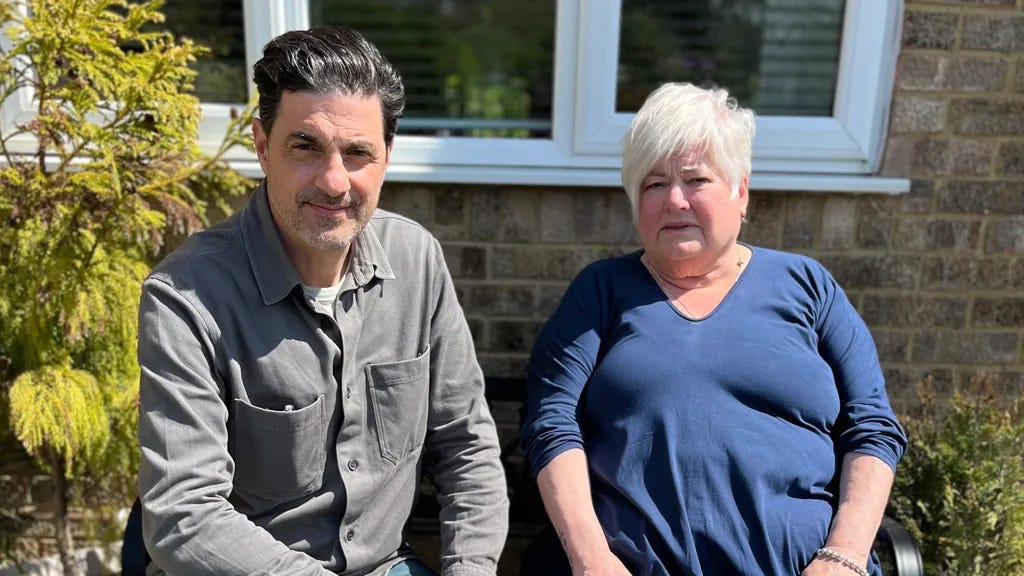
I have a huge amount of admiration for the people that survive this and come forward to talk about it. People like Ava, divorced and living alone, she lost her £67,000 inheritance in less than a year to a scammer calling himself David West and posing as an American oil-rig worker.
Unfortunately, her case is all too familiar. In the last thirteen months, the City of London Police have recorded 13,375 cases and £133 million lost to romance scams. That’s £360,000 every single day lost to scammers breaking victims hearts. Remember, these are the cases we know about, there will be hundreds if not thousands more that go unreported because the victims feel too ashamed to do so.
There are so many heartbreaking stories out there. An unnamed man from Northern Ireland lost more than £200,000 in a romance scam to a woman he met on a dating app. He said:
“This entire experience has had a devastating impact on my whole life, both financially and emotionally…I felt ashamed that I had let myself fall victim to this fraud.”
An unnamed man in Cumbria, who had lost his wife, was tricked into sending £30,000 to scammers on dating apps. Sarah, from Swale, had suffered a bereavement and was tricked by scammers into believing that she was in a relationship with an American serviceman who told her he needed help with food and medical expenses. She sent them £100,000 and lost her home. She told the BBC:
"I lost my house, I lost my car, my furniture, I lost my self-respect."
I also spoke to Shirley who thought she was communicating with Austin Butler on Instagram. She reached out as a fan and surprisingly ‘he’ replied from different account. ‘He’ said this was his personal account and the official one is run by his people and is not actually him. This is a common ruse scammers use to convince victims they are talking to the real celebrities. They got to know each other. Shirley felt close to him as she had lost her mother to cancer and it so happens that Butler’s mother also died of cancer. The scammers then started asking her for money that ‘Butler’ would donate to cancer charities. In total Shirley lost a thousand pounds. She said:
“I felt so stupid. I felt like my whole world crumbled and it just didn’t make sense. I was trying to work out how he could do that, how anyone could do that to anyone. No, it wasn’t really fair what he did.”
It’s easy to read these stories and have very little sympathy for the those that fall for them. After all, who sends money to people they’ve never met? Why would a Hollywood A-Lister be asking you for cancer donations? These people are stupid and gullible. I have met dozens of victims like Shirley and I can tell you not once did they come across as either of those things.
Falling for a scam is not a measure if your IQ or how ‘street smart’ you are.
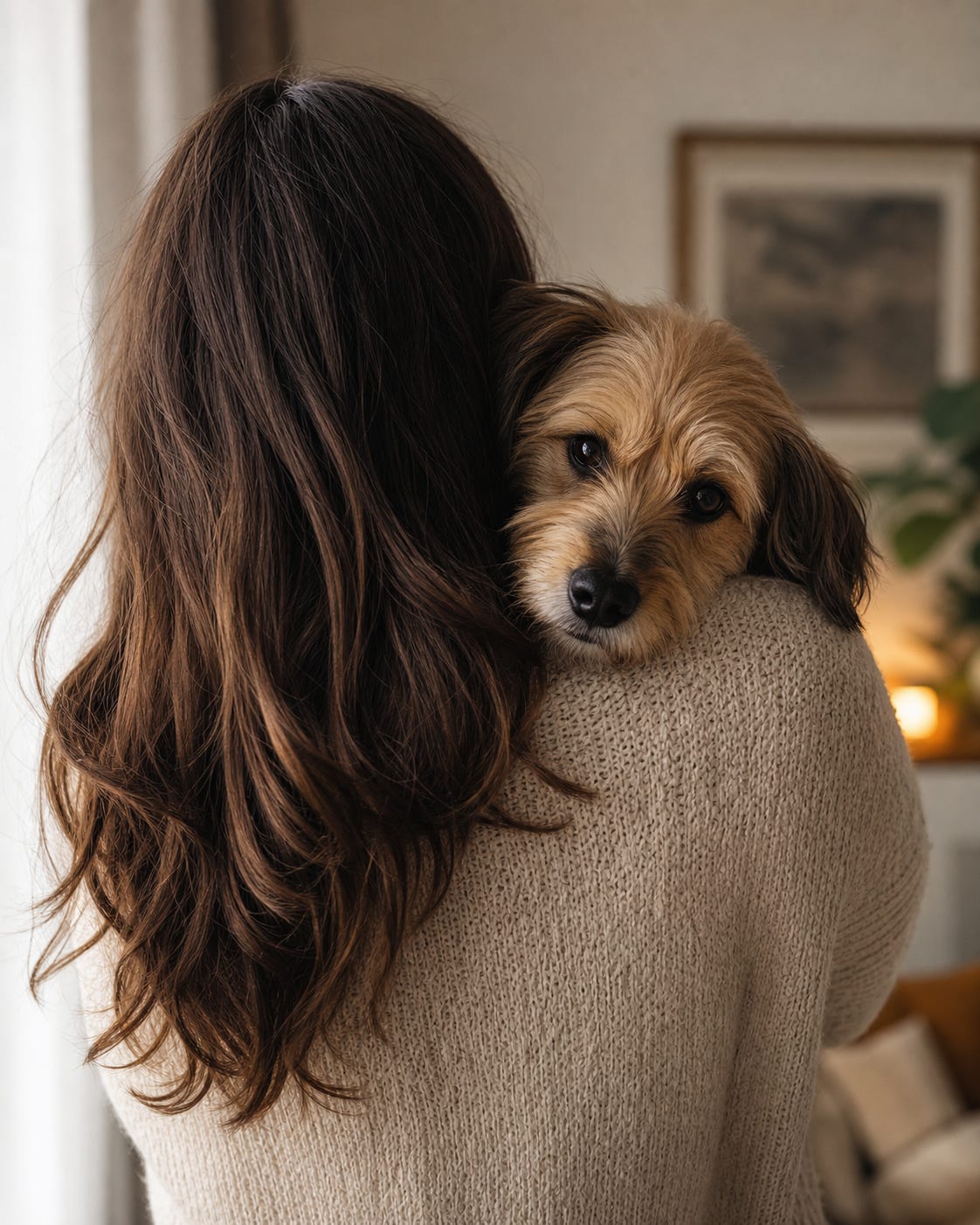
I’ve written and carried out over 500 scams and I could be scammed on my way to the studio tomorrow. These scammers have spent thousands of hours perfecting their techniques. To give you an idea of how much detail they go into, I remember speaking to a scammer from Nigeria, I asked him how he chose his victims. He said he looked for older women, divorcees and people of faith. So far, so logical. Then he said he would always target women with pets. When I asked him why, he said: “Proof of disposable income.”
These scams are very hard to trace. If you follow the money, it quickly disappears in multiple accounts around the world and if it goes into crypto it just vanishes. What we do know is that most of it is organised crime. Most of the information we get is when so-called scam compounds are shut down. These heavily guarded often razor wire protected compounds are essentially scam factories.
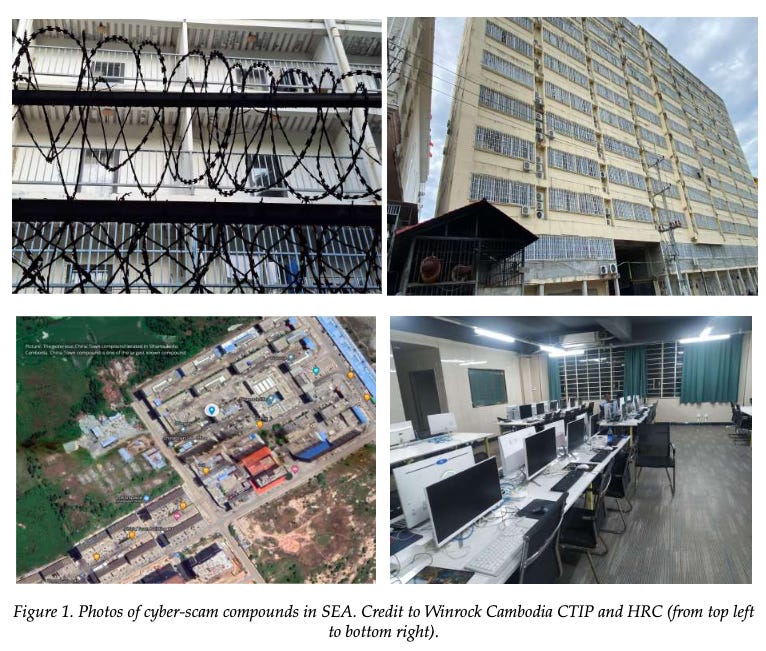
Hundreds of employees, some of them trafficked into modern slavery are sat in front of screens with headsets on furiously typing away. Imagine a call centre dedicated to fraud but the employees cannot leave. I have seen screen shots provided by former workers who managed to escape that show purpose built apps which can control hundreds of chats on messaging platforms like Telegram and WhatsApp. With the help of AI the scammers are typing into the app in Chinese and the message is instantly translated and sent in English or any chosen language.

Romance scams sometimes develop into what criminals call ‘pig butchering’. The idea being you fatten up the victim before bringing them to slaughter. The fattening up in romance scams is the honey moon period. No demands for money, just building trust and finding out as much as possible. Do they have a car? Do they own their own home? How much do they have in savings? And then, when the time is right, the demand for money becomes incessant. It can manifest itself as money for an emergency, travel or a sure fire investment scheme - usually crypto, but they won’t stop until all the money is gone or they get found out.
As you can imagine fraud on this scale requires people working 24/7. Sometimes, for each victim there will be several handlers all working off pre-arranged scripts and case notes for each target. One handler will pick up where another left off. Occasionally a low level scammer will make initial contact and will pass on the communications to a senior handler to close the deal. This is very similar behaviour to traditional boiler room scams and even some legitimate high pressure investment companies.
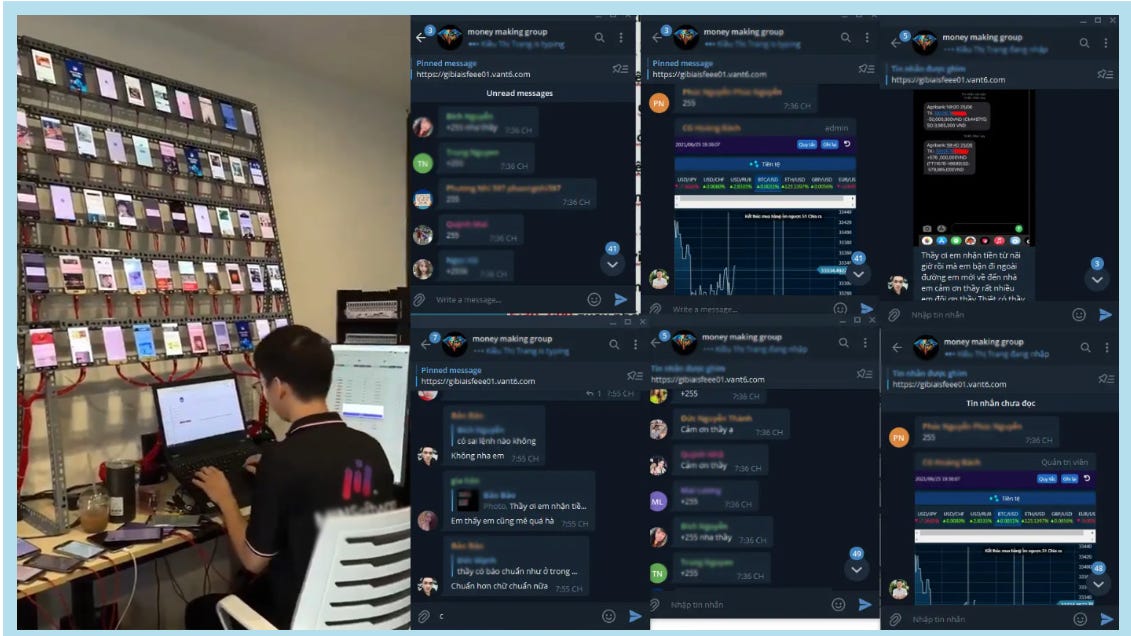
Arguably the hardest part is the approach. How do you pick up someone online? How do you flirt with someone in a language you don’t speak and a culture you don’t associate with? Below are some examples of intercepted scripts used by romance scammers.
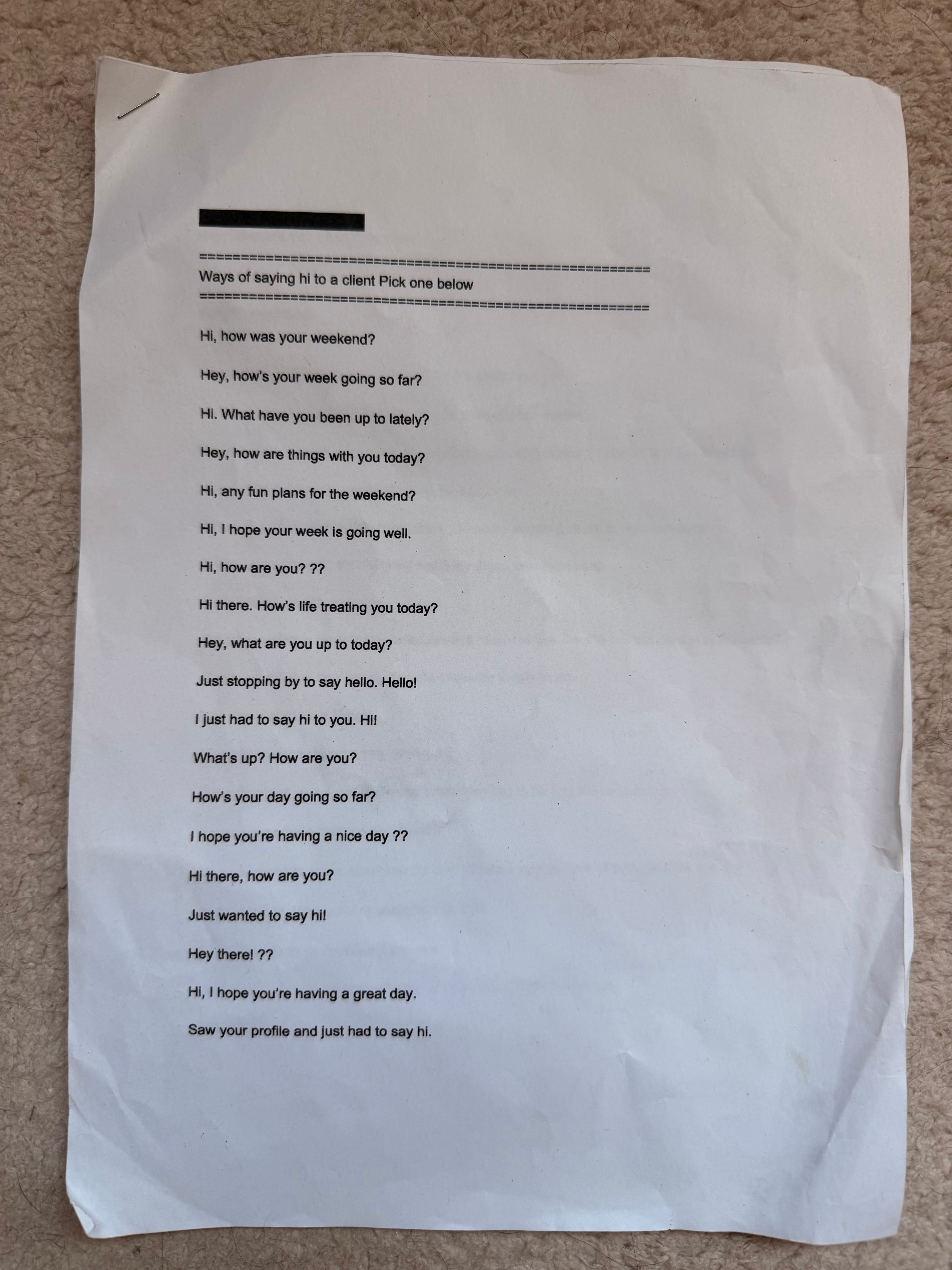
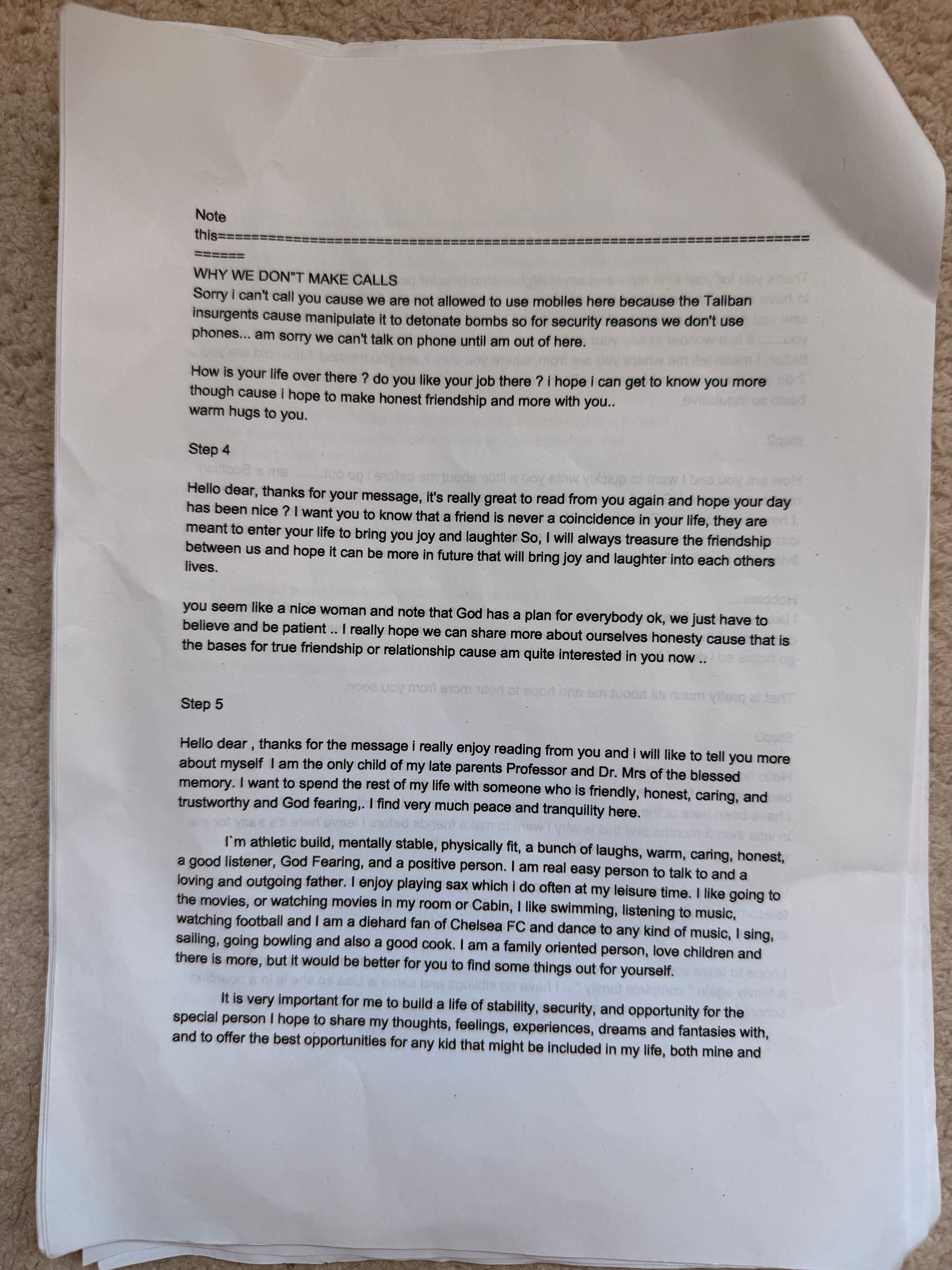
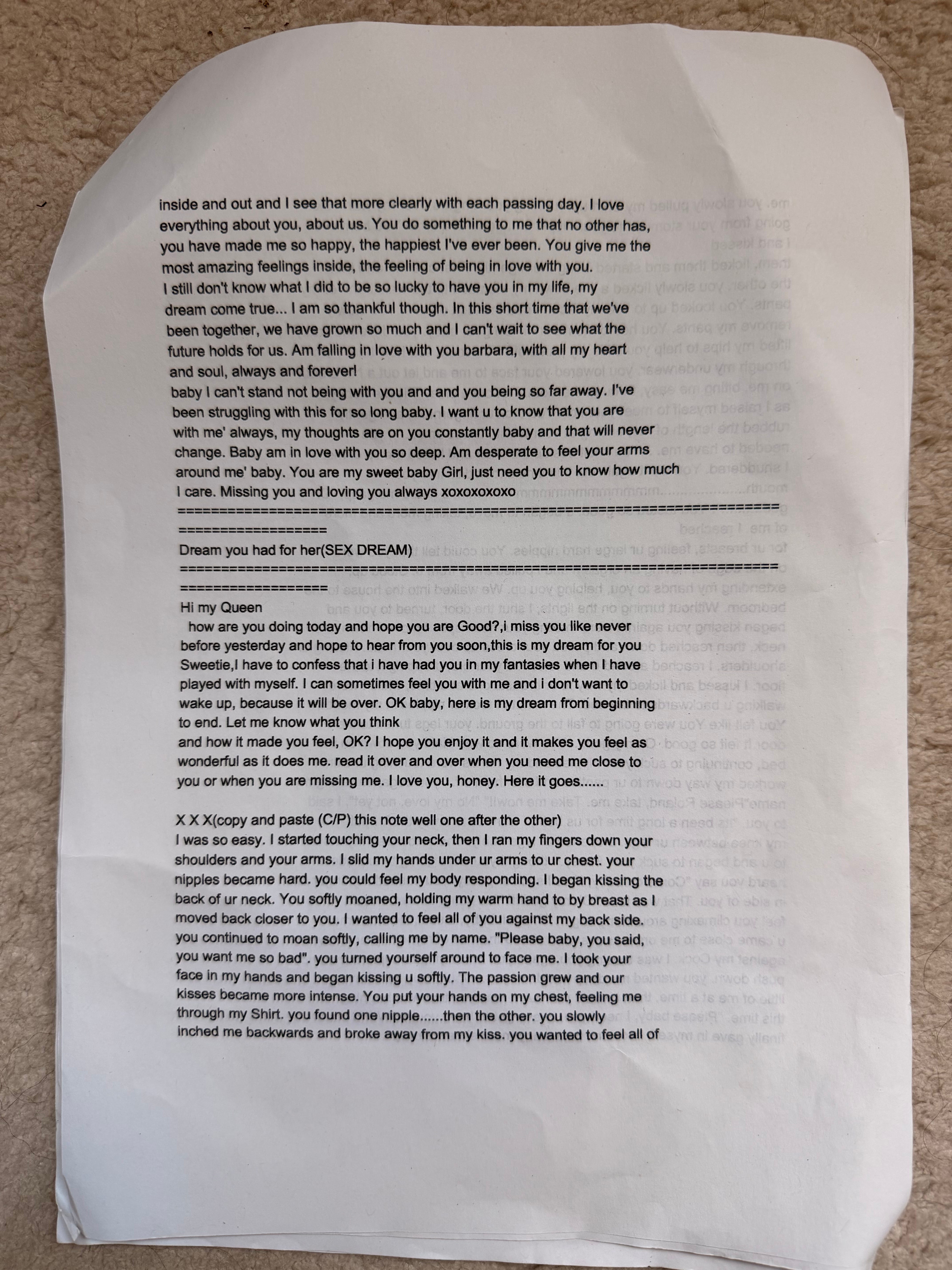
As you can see nothing is really left to chance. It is all a process, and with large language model AI this has become child’s play.
Ultimately though we have to ask the question of why these scams are so successful? When we look closely at the victims, one thing becomes very obvious. Loneliness. Look at the examples we’ve mentioned - Ava, divorced lived alone, unnamed man in Cumbria, lost his wife, Sarah, from Swale, had suffered a bereavement, Shirley, lost her mum. This is crucial in so many romance scams. Loneliness is at the centre of most of the cases I have come across. For many of the victims like Ava, daily communications with their scammers were sometimes their only interactions with another human that day. Let that sink in.
The levels of loneliness in the UK are staggering. The latest Community Life Survey carried out by the government for 2024/25 showed that 7% of adults in England alone (aged 16+) reported that they felt lonely often or always. That’s 3.2 million people. In Scotland roughly 4% experienced feelings of loneliness ‘Most, almost all or all of the time’ in 2024, in Wales 13% of people were lonely in 2022 to 2023. That’s a lot of people, roughly 4 million adults feeling lonely. It’s an astonishing statistic considering we live in the most ‘connected’ time in history.
Now imagine if only a small portion of them started looking for company on dating apps and social media platforms - fruitful hunting ground for scammers.
So, what can we do about it? This is one of those occasions where people not involved in the scam have a big part to play. Keep a close eye on your friends and family. Check in on them as often as you can. It would be impossible to keep on top of all communications and financial transactions, so the biggest red flag to look out for is when they start isolating themselves or are shutting down any conversation into who they are speaking with online. This is because the first thing scammers do is try and isolate their victims from the people that can help them. The script is usually something like this:
Victim: My family are starting to get suspicious.
Scammer: That’s because they don’t understand what we have. Our love is special and pure, they will never accept that you and I are one. Don’t let them judge you.
Victim: They worry about me.
Scammer: They are jealous. A love like ours is one in a million. When we can be together they we realise this. You don’t need that negativity in your life. I cannot wait to be with you, to be there and protect you from everyone.
If someone is refusing to talk openly and candidly about someone they met online you should start to worry.
Finally, if you are looking for love or companionship online, do keep a look out for some typical red flags:
Moving off platform - if your newfound love wants to quickly move from the dating app to a messaging service, that’s is often to avoid scrutiny from the dating websites and because their software is designed to be used on messaging apps.
Reluctant to meet in person - if they offer phone and video calls that still may not guarantee legitimacy. See here for video calls.
Check the photo - Scammers no longer have to steal other people’s photos as AI generated ones are so easy to come by. This website generates them for free and is very easy to use. However, they do get sloppy and use existing photos so it is always worth doing a reverse image search with PimEyes or Google Lens
Request for money - any request for money from a person you have not met in real life should be treated with extreme suspicion. Just don’t do it. No matter how convinced you may be, don’t risk it. If you are determined to go ahead, then do me a favour, before you do anything, tell your best friend, your close relative or neighbour, and if you’d rather not tell them, that’s your gut telling you you’re doing something you shouldn’t be.
It’s easy to judge people as stupid or gullible when you hear some of these stories but we all have our weaknesses. Theirs was finding a partner, for others it’s financial gain. We are not so quick to judge when we hear of people losing their pensions to Ponzi schemes or life savings to clever investment scams and yet romance scams follow exactly the same pattern and are carried out by the same scammers often from the very same locations. So, let’s check in on each other and if in doubt share your story with your nearest and dearest, if you’re not seeing the scam it’s likely they will.
Staggering!
Shouldn't it be possible to fight back with AI? I mean, you set up some fake accounts and when they get picked up by someone asking for money, AI takes over. With multiple accounts scammers could be flooded with fakery themselves?